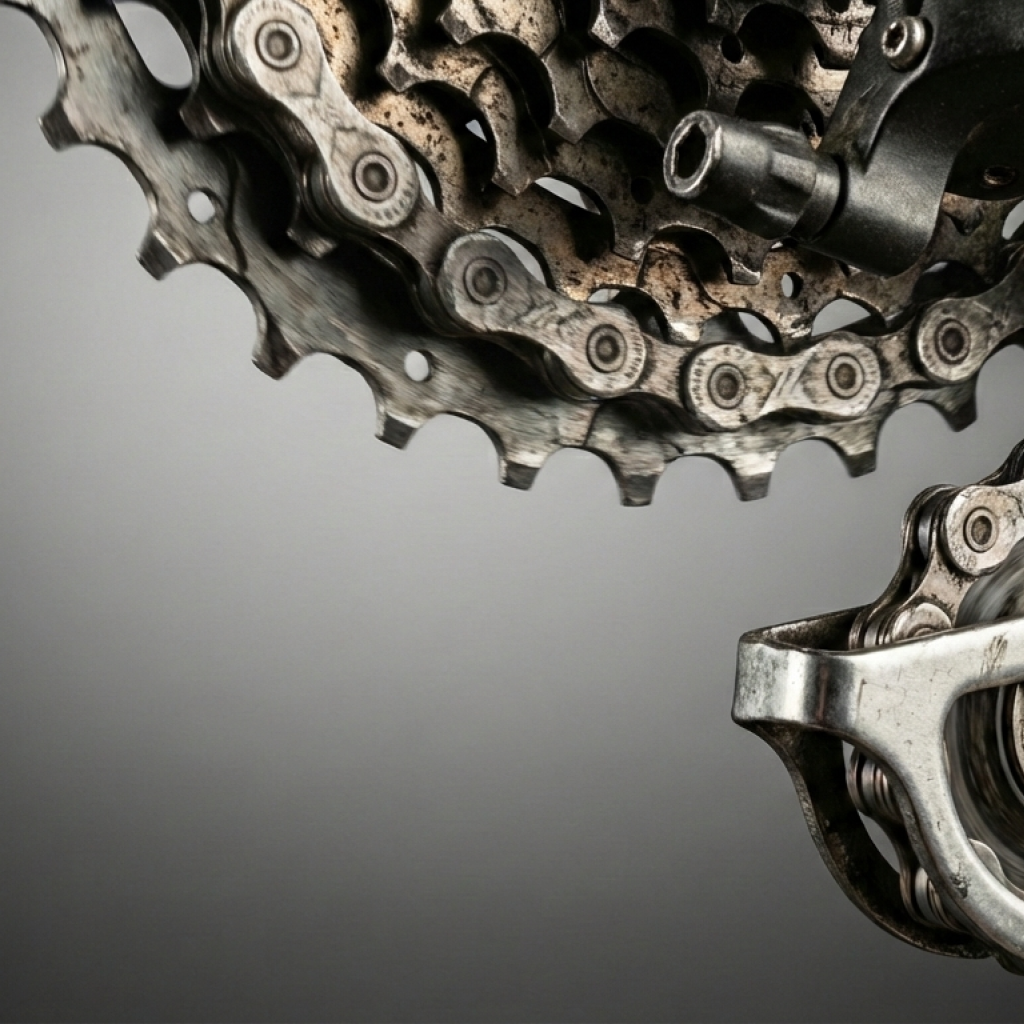
Loss Point #1: The Chain (2-8 Watts)
The chain is your drivetrain's primary power transmitter and its biggest source of potential drivetrain friction. Understanding where friction occurs requires looking inside the chain itself, not just at the obvious external contact points.
SILCA, a leader in chain lubrication science, identifies the critical friction sources:
"The interaction between the inner plates and the rollers is one of the main sources of friction in a chain. This friction occurs every time the chain links bend — think every time around the chain ring, both pulley wheels, and the cassette." — SILCA: Chain Friction Explained
The gap between inner plates and rollers measures approximately 1/4 the thickness of notebook paper. Every pedal stroke forces these microscopic surfaces to slide against each other thousands of times. In a clean, well-lubricated chain, this friction is minimized. The lubricant creates a protective film that prevents metal-to-metal contact.
In a worn or dry chain, drivetrain friction multiplies. As the chain elongates through pin and roller wear, the spacing between links no longer matches cassette tooth spacing precisely. This misalignment forces the chain to bend slightly at each engagement point, increasing internal friction exponentially. What started as 2 watts of friction in a new, clean chain becomes 5-8 watts in a worn, poorly lubricated chain at 0.75% wear or beyond.
Zero Friction Cycling's extensive testing validates this progression:
"Your chain and its lubricant are the most important drivetrain components. Buying cheap chains to save money just costs you more as they wear out faster, usually taking your cassette with it." — Zero Friction Cycling
The chain friction tax is detailed extensively in our previous article on The Friction Tax, but the key point remains: a clean, properly lubricated chain operating below 0.5% wear costs 2-3 watts. A neglected chain approaching 1.0% wear costs 6-10 watts. The difference accumulates over every mile.
Loss Point #2: Derailleur Pulleys (1-4 Watts)
The rear derailleur's two pulley wheels guide the chain through its path and maintain tension. Each pulley contains a bearing that rotates under load every time you pedal. These small bearings contribute more to cycling power loss than most cyclists realize.
Standard derailleur pulleys with basic sealed bearings produce roughly 1-2 watts of friction in clean, maintained condition. The losses come from bearing drag and the chain wrapping around the small diameter pulley wheels, which requires tighter bending and more articulation friction than larger diameter components.
This is why oversized pulley wheel (OSPW) systems exist. By increasing pulley diameter, the chain bends through a gentler arc, reducing articulation friction. CeramicSpeed and similar manufacturers claim 2-5 watt savings from OSPW systems with ceramic bearings. Independent testing suggests the real-world benefit is closer to 1-3 watts in optimal conditions.
The larger issue is pulley maintenance. Dirt, old lubricant, and debris accumulate in the derailleur cage over thousands of miles. The pulley bearings can become gritty or dry. The pulley teeth wear down. In this degraded state, what should be 1-2 watts of friction becomes 3-5 watts. The loss is gradual enough that you don't feel it happening, but your segment times show the tax over time.
Regular cleaning and occasional pulley replacement maintain baseline efficiency. For most riders, this matters more than upgrading to exotic materials. A clean standard pulley outperforms a dirty ceramic one.
Loss Point #3: Cassette & Chainring Engagement (1-3 Watts)
When a chain elongates, it no longer seats correctly in cassette and chainring teeth. Instead of load distributing evenly across the tooth face, it concentrates at the tip. This misalignment creates two problems: accelerated wear of the expensive components and increased drivetrain friction.
The chain-cassette misalignment forces imperfect meshing. Each tooth engagement requires the chain to flex slightly to accommodate the dimensional mismatch. This flex adds friction to every pedal stroke. In a system with a fresh chain on a healthy cassette, engagement friction is minimal, roughly 1 watt.
As chain wear progresses and cassette teeth begin to hook from uneven loading, engagement friction increases to 2-3 watts or more. The worn cassette compounds the problem even after you install a new chain, because the hooked teeth no longer provide optimal engagement. This is the cascade failure that Park Tool warns against:
"Replacing a chain at the correct interval can extend the life of a cassette by three to four times." — Park Tool: When to Replace a Chain
Cross-chaining adds another friction penalty. Running the chain at extreme angles (big-big or small-small) increases plate-to-plate contact friction and forces the chain through inefficient bends at the front derailleur. This can add 1-2 watts depending on severity. Modern drivetrain design minimizes cross-chaining scenarios, but the losses still exist at extremes.
The combined cassette and chainring engagement losses range from 1 watt in optimal conditions to 3-4 watts with worn components and poor chain lines. This loss category is entirely preventable with timely chain replacement, as detailed in our drivetrain efficiency guide.
Loss Point #4: Wheel Bearings (1-3 Watts)
Wheel hubs contain bearings that support your weight and all pedaling forces while allowing the wheels to rotate freely. In properly adjusted, well-maintained condition, quality hub bearings contribute approximately 1-2 watts of total friction across both wheels.
This baseline assumes the bearings are correctly tensioned (no play but no binding), properly greased, and free from dirt or wear damage. Over time, several failure modes increase bearing friction. Bearings can be over-tightened during installation or adjustment, creating constant drag. The grease can dry out or become contaminated. The bearing races can develop pitting from impacts or corrosion. Seals can stick or drag.
In degraded condition, wheel bearings can contribute 3-5 watts of total friction. Severely damaged or bone-dry bearings can exceed this, though at that point the wheel usually feels noticeably rough when spinning. Most bearing issues exist in a middle ground where friction increases but the wheel still feels reasonable.
The simple spin test reveals bearing health. A properly maintained wheel should spin freely and coast for 20-30 seconds when spun by hand. If the wheel stops in 5-10 seconds, the bearings need service. Manufacturers recommend annual bearing service for sealed cartridge bearings, more frequently for cup-and-cone systems or harsh conditions.
For most cyclists, bearing maintenance is neglected until something feels obviously wrong. This allows 1-2 watts of extra friction to persist for thousands of miles. Regular service returns those watts.
Loss Point #5: Brake Drag (0-15 Watts) — The Most Common Hidden Culprit
Brake drag is the most frequently overlooked source of cycling power loss and often the largest single contributor in a poorly maintained bike. Unlike worn chains or dirty derailleurs that degrade gradually, brake drag can appear suddenly and persist unnoticed for months.
Disc brakes are particularly susceptible. A slight rotor warp, caliper misalignment, or pad contamination creates constant light contact between pad and rotor. This friction doesn't produce the obvious squeal or vibration of severe brake rub. It's a whisper-quiet tax on every revolution.
Industry testing and mechanic experience suggests that even slight disc brake drag can cost 5-10 watts per wheel. Moderate pad contact can reach 10-15 watts. In severe cases (noticeable drag), losses can exceed 20 watts. The frustrating part is how common this is and how often riders don't detect it.
The spin test reveals brake drag immediately. Lift each wheel and spin it firmly. A properly adjusted brake allows the wheel to coast for 20-30 seconds, gradually slowing. If the wheel stops in 5-10 seconds, or if you hear any contact sound, you have brake drag. For disc brakes, watch the rotor as it passes through the caliper. Even 1-2mm of lateral wobble can cause intermittent contact.
Fixing brake drag is often simple: loosen the caliper mounting bolts, squeeze the brake lever to center the caliper, retighten the bolts while holding the lever. For persistent issues, the wheel may need truing or the rotor needs straightening. These are routine maintenance tasks, but many riders never check.
Rim brakes suffer similar issues. Brake pads that sit too close to the rim create constant drag. Misaligned pads that contact the tire sidewall rather than the braking surface waste power and destroy tires. Sticking brake pivots prevent full pad retraction.
Check your brakes first when investigating cycling power loss. It's the highest impact, easiest fix, and most commonly neglected component. Eliminating 10 watts of brake drag requires 10 minutes and basic tools. Gaining 10 watts through training requires months.
Loss Point #6: Tire Rolling Resistance (Brief Context)
Tires are a significant contributor to cycling power loss, but their optimization is somewhat separate from the mechanical maintenance focus of this article. Proper tire pressure, tire choice, and tire condition all dramatically affect rolling resistance, with losses ranging from 15 watts per tire in optimal conditions to 30+ watts in poor conditions.
Underinflated tires are the most common issue. Running 20 PSI below optimal pressure can add 10-15 watts per tire. Aged tires with hardened rubber compound increase rolling resistance by 3-5 watts per tire even at correct pressure. Tire choice matters immensely, with differences of 10-20 watts between fast racing tires and heavy touring tires.
The good news is that tire pressure is easily checked and corrected. The challenge is that optimal pressure varies by tire, rider weight, and road conditions, and requires regular monitoring as tires naturally lose pressure.
For the purposes of understanding total system cycling power loss, include tires in the calculation but recognize that tire optimization deserves dedicated attention. We'll cover tire rolling resistance in depth in a future article. For now, know that tires typically account for 15-30 watts of your total power loss depending on setup and maintenance.
The Cumulative Tax: System-Level Thinking
Individual component losses seem small in isolation. A few watts here, a few watts there. But cycling power loss is cumulative. Every friction point extracts its tax simultaneously, and the total impact is substantial.
Consider two identical cyclists producing identical power on identical routes. One maintains a pristine bike, the other neglects routine maintenance. The cycling efficiency difference is dramatic:
Well-Maintained System (250W input)
- Clean, lubed chain (< 0.5% wear): -2W
- Clean derailleur pulleys: -1W
- Fresh cassette, aligned chainring: -1W
- Serviced wheel bearings: -1W
- Properly adjusted brakes (zero drag): 0W
- Optimal tire pressure and condition: -15W
- Total loss: 20W (8%)
- Power to road: 230W
Poorly Maintained System (250W input)
- Worn, dry chain (0.75%+ wear): -8W
- Dirty, worn derailleur pulleys: -4W
- Worn cassette from neglected chain: -3W
- Tight or contaminated wheel bearings: -3W
- Slight disc brake rub (undetected): -10W
- Underinflated and aged tires: -22W
- Total loss: 50W (20%)
- Power to road: 200W
The cycling efficiency gap is 30 watts. This is not theoretical. It's the measured difference between systematic maintenance and systematic neglect.
What does 30 watts of cycling power loss mean in real-world riding? At 250 watts total output, losing 30 watts to mechanical friction translates to roughly 0.5-0.7 mph slower climbing speed, 30-45 seconds per mile on moderate grades, and 15-20 minutes over a typical 30-mile hilly ride. On Strava segments, it's the difference between top 10 times and mid-pack results at identical fitness levels.
Professional teams understand this arithmetic. WorldTour mechanics replace chains every 1,500-2,000 kilometers regardless of measured wear. Brake calipers are checked daily. Wheels are trued weekly. Bearing preload is verified before every race. The goal is not just reliability but preserving every available watt for the rider.
The amateur cyclist producing 250 watts through months of interval training loses 12% of that power to preventable mechanical friction. The training time invested to produce those watts makes the maintenance time to preserve them trivial by comparison.
How Componentry Fits Into Your Care Routine
Tracking individual component wear is manageable. Tracking the combined wear state of an entire bike across multiple bikes becomes complex quickly. Mental tracking fails. Spreadsheets require discipline. Maintenance gets deferred until symptoms appear, leading to unnecessary cycling power loss.
Componentry removes the manual tracking burden through automated integration with Strava, Garmin, Wahoo, and other platforms. Every ride updates the usage data for every component on the bike you rode. The system tracks chains, cassettes, brake pads, tires, and other wear items independently, accounting for different wear rates across different bikes.
The value extends beyond simple mileage counting. A hilly 50-mile ride stresses the drivetrain differently than a flat 50-mile ride. Wet conditions accelerate chain wear. Gravel riding differs from road riding. Componentry's algorithms account for these variables to provide more accurate wear predictions than simple odometer tracking.
You receive alerts before components reach critical thresholds. For a chain, the notification arrives at 1,800 miles on an 11-speed system, giving you time to order a replacement before hitting the 2,000-mile replacement point at 0.5% wear. The alert is proactive, not reactive. It tells you to replace before drivetrain efficiency degrades and before cassette damage begins.
The dashboard provides system-level visibility. You see not just the chain status but the cassette status, the brake pad status, the tire mileage. You can identify when multiple components approach service intervals simultaneously and batch the maintenance work. You can see which bike in your stable needs attention and which has thousands of miles remaining on all components.
For the performance cyclist optimizing marginal gains and minimizing cycling power loss, Componentry ensures you're never unknowingly paying the friction tax. You maintain that 8% baseline loss rather than sliding toward 15-20% as components degrade. You protect expensive cassettes and chainrings through timely chain replacement. You avoid the cascade failures where deferred maintenance creates compound problems.
The mental load reduction is significant. You don't need to remember when you last replaced the chain. You don't need to estimate brake pad wear by visual inspection. You don't need spreadsheets tracking tire mileage across four bikes. You just ride, and the system tracks everything automatically.
The 30 watts you preserve through systematic maintenance are watts you already produced. Componentry helps you keep them.
Stop paying the friction tax. Componentry tracks the wear state of every component across every bike you ride — chain, cassette, brake pads, and more — by syncing automatically with Strava, Garmin, and Wahoo. Get alerts before components degrade performance, not after symptoms appear. Get started free →
Recommended Videos & Further Reading
Chain Friction Explained — SILCA
Deep technical analysis of where friction occurs in bicycle chains, with detailed diagrams showing the internal mechanics of chain articulation and the critical role of lubrication.
When to Replace a Chain on a Bicycle — Park Tool
Industry-standard chain wear measurement methods and replacement thresholds for different drivetrain speeds, including the protection this provides for cassettes and chainrings.
Zero Friction Cycling — Adam Kerin
Independent testing facility with over 300,000km of controlled chain and lubricant testing. The most comprehensive durability and efficiency data available in the cycling industry.
GCN Maintenance Tutorials — Global Cycling Network
Video guides for brake adjustment, drivetrain cleaning, bearing service, and identifying common maintenance issues that cause power loss.
The Friction Tax: How a Worn Chain Costs You 5-10 Watts — Componentry
Detailed exploration of chain-specific power loss and the cascade effect on cassettes when chains are replaced too late.
Drivetrain Efficiency: The Physics of Cassette Precision — Componentry
Technical deep dive into why expensive cassettes require strict maintenance precision and how to optimize drivetrain efficiency.
Digital Twin Bicycle Maintenance — Componentry
How predictive tracking and systematic maintenance eliminate reactive repairs and optimize component replacement timing across your entire bike.