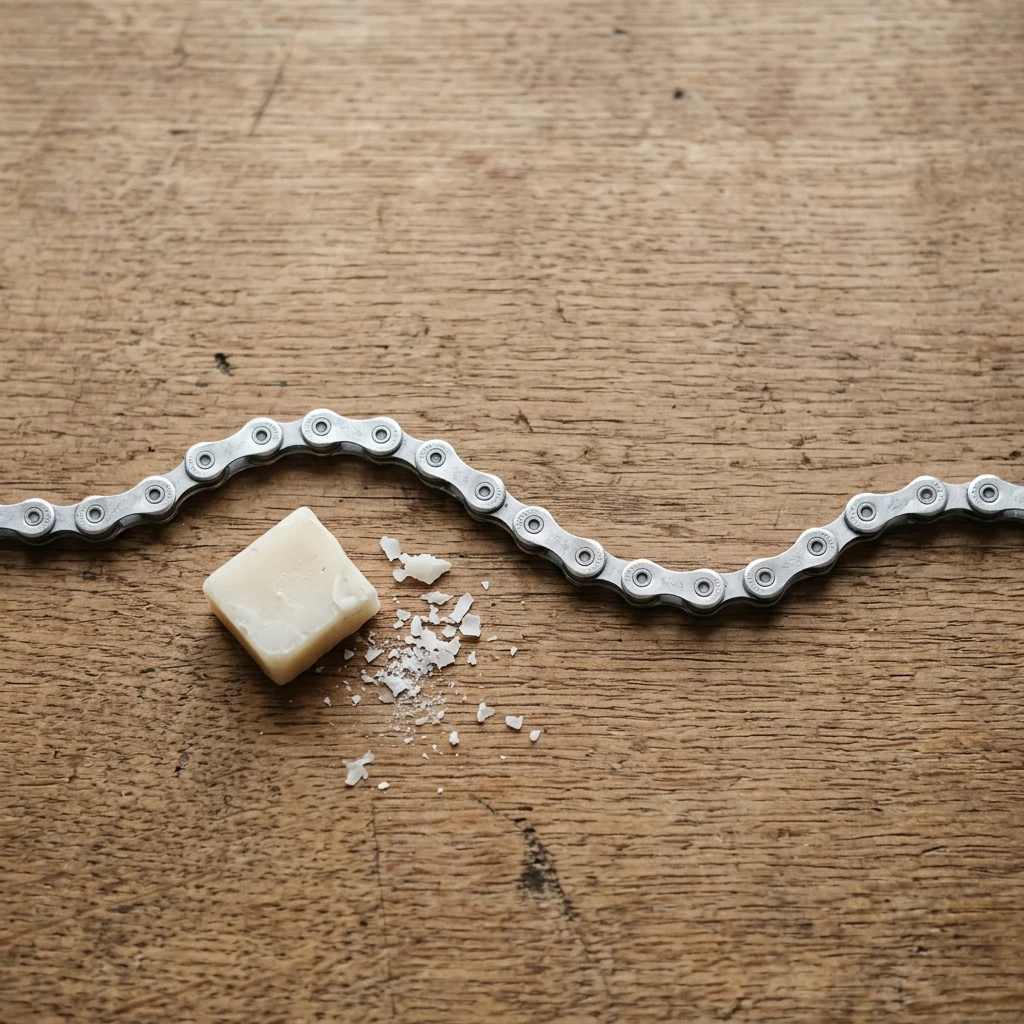
The Chain, From Componentry
Componentry's connector returned the chain on that bike as it stood two minutes after the session ended:
- 732 km on it, with 21% of its expected life used
- Last waxed 28 days and 193 km earlier
- A wax reminder that was three days overdue
- 1 W lost against a fresh chain
- Under 1 W of that recoverable with a clean and a re-wax
What the Two Numbers Say Together
1 W against a 124 W average is about 0.8%.
Almost all of it is maintenance. Componentry splits the loss into 0.5 W from the wax ageing, 0.4 W from dirt and 0.1 W from stretch. At 21% worn the chain itself is fine, so a new chain would win back about a tenth of a watt. A re-wax wins back the rest.
I can't feel a watt in a tempo session. What I can use is the direction it points: this is a re-wax job, and the reminder had been telling me so for three days.
Why It Takes Both
Strava has the ride in detail: power, cadence, best efforts. Componentry has the bike: what's fitted, how worn it is and when it was last waxed.
With both connected to Claude, one question gets both:
How many watts is my chain costing me, and should I re-wax before my next session?
What It Can't Tell You
The power loss figure is the state of the chain now. There's no history behind it, so you can't ask what the chain cost you on a ride three weeks ago.
It's a modelled estimate. Nobody put this chain on a test rig. Below a watt the model isn't accurate enough to print a decimal, which is why the app shows the recoverable part as "<1 watt".
Try It Yourself
Componentry's connector works in Claude on the web, the desktop app and the mobile apps. The steps are under AI assistants in your account, and the guide covers what it can and can't see. The power loss figure was already in the web and mobile apps, and the connector now returns it too.
This was my own riding data, read through Strava's connector with my own account. Strava had no part in the experiment.