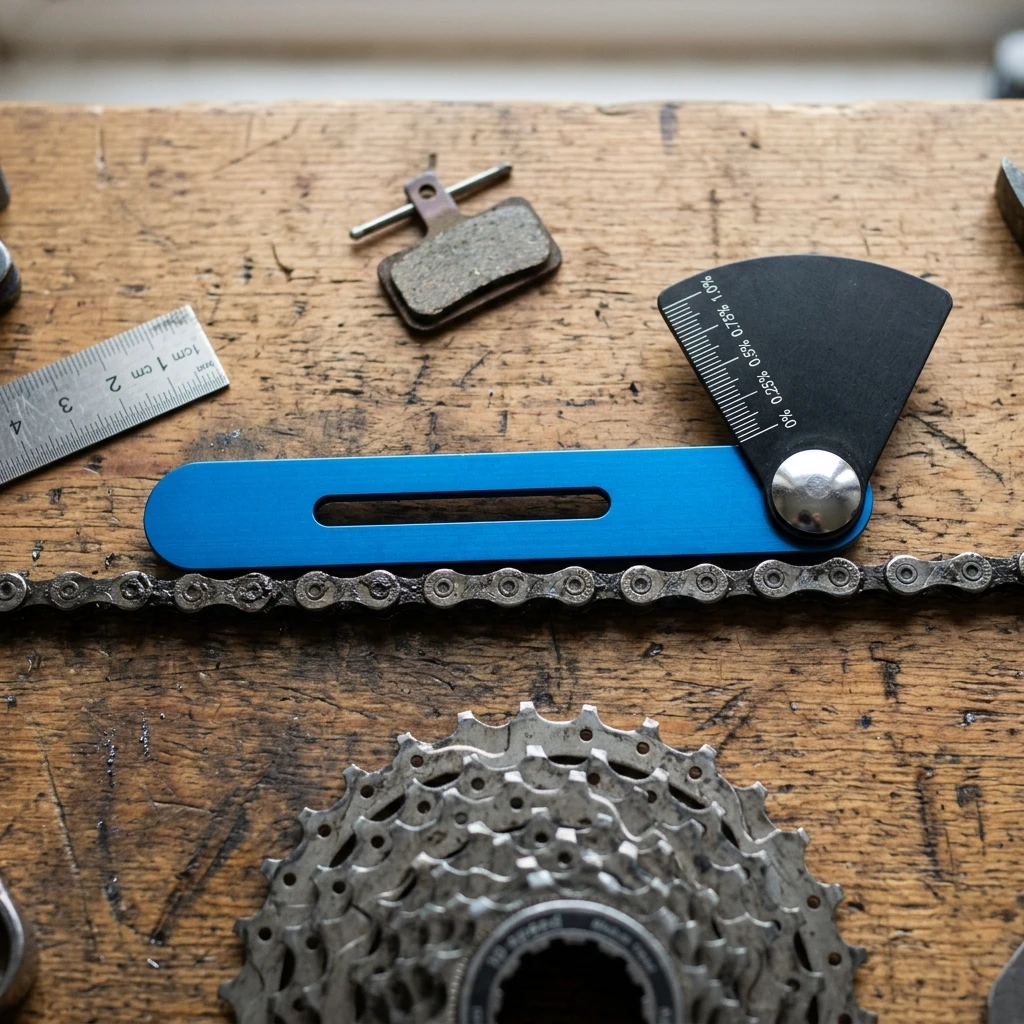


Most home mechanics do not run out of maintenance knowledge. They run out of sessions, and without a bike service checklist to work from, jobs get done one at a time instead of together. A reminder fires for the chain, so the chain gets checked. The brake pads are also close to their wear line, but that reminder is not the one that fired, so it waits. Three weeks later the brake reminder fires on its own, the bike comes off the hook a second time, and a job that could have taken one sitting has taken two.
A proper bike service checklist fixes that, but only if it is treated as one session with a shape, not a pile of tasks done in whatever order they occur to you. Here is the order that actually works, how to turn the reminders you already have into that session's checklist, and what to do with the parts that come off so the work does not just disappear the moment you put the tools away.
Why the Order of a Full Bike Service Matters
Skipping straight to the part that is bothering you feels efficient. It usually costs time instead, because several of the checks you will want to make are only accurate once earlier steps are done.
Clean before you inspect. A drivetrain caked in road grime hides the one thing you are trying to see: how much material is actually gone from the chain, cassette, and chainrings. Bicycle Blue Book's tune-up checklist puts cleaning first for exactly this reason, recommending you:
"Use a bucket of soapy water and a soft brush to scrub your bike down, including all components like the chain, cassette, and derailleurs." — Bicycle Blue Book: Bike Tune-Up Checklist
From there, a sensible full-service order looks like this:
- Clean the drivetrain, frame, and wheels so nothing is hidden under grime.
- Drivetrain: chain wear, cassette and chainring teeth, derailleur function.
- Brakes: pad thickness, rotor or rim wear, lever feel.
- Wheels and tires: tread, sidewall condition, spoke tension, tire pressure.
- Bearings and electronics: hub and headset play, battery levels on Di2, AXS, or a power meter.
The reasoning holds up under inspection. Wheels get trued and bearings get checked last partly because Bicycle Blue Book notes the same test applies at both ends of a service: "To check the bearings, grab the wheel or other component and try to move it from side to side." Doing that check on a wheel you have not yet reinstalled or trued gives you a false reading. Work in this order and each step sets up the next one instead of undoing it.
Turn Your Open Reminders Into Your Bike Service Checklist
The order above tells you how to move through the bike. Your open reminders tell you what actually needs doing on this particular bike, on this particular day, and that is the part a generic bike service checklist cannot know on its own.
Most riders have more than one component approaching a service point at any given time, because wear does not arrive on a schedule that suits your calendar. Park Tool's chain wear thresholds are a good example of a number worth checking rather than guessing:
"Using a chain beyond its intended wear limit will prematurely wear out your cogs and chainrings, so staying on top of this routine maintenance task can save you a lot of cost and hassle in the long run." — Park Tool: When to Replace a Worn Chain
Park Tool sets that limit at 0.5% elongation for 11 and 12-speed drivetrains, and 0.75% for 10-speed. Zero Friction Cycling's independent chain testing shows how fast a chain can cross that line under real riding conditions, which is the whole reason a reminder exists in the first place: nobody checks chain wear from memory reliably enough to catch it right at the threshold.
If you have reminders open for the chain, the brake pads, and a tire inspection, that is not three separate future trips to the workstand. It is the checklist for one session, worked through in the order above so nothing gets missed and nothing gets checked twice.
When a Full Service Beats a Quick Check
Not every reminder deserves a full session. If all you have due is a quick maintenance check, a glance at brake pads, tires, and chain wear with nothing yet at a replacement point, a full teardown is wasted effort. Save the full session for when two or more reminders land close together, when any single component is at or past its stated limit, or when it has simply been a season since the bike was properly gone over.
A useful rule of thumb: if clearing one reminder means the bike is already on the stand and partially apart, clear whatever else is close to due while you are there. That is the batching instinct a full service is built around.
Retiring and Replacing Parts Without Losing the Story
The part of a full service riders skip most often is not the wrench work. It is writing down what came off, in what state, and what went on in its place. A chain gets swapped, the old one goes in a drawer or the bin, and three months later nobody remembers whether that cassette is six months old or two years old.
Recording a retirement properly needs three things: the wear the old part had reached when it came off, a note on why, and a link to whatever replaced it. Skip any one of those and you are back to guessing the next time the question matters, whether that is at the next service or when you are pricing a bike for resale and a buyer wants to know the cassette's actual age rather than an estimate.
This only works if retiring a part happens in the same place as the rest of the session's record, not as a separate, disconnected action. A retirement logged on its own tells you a part came off. A retirement logged inside the service that removed it tells you why, what condition it was in, and what replaced it. That is a story you can actually use, not just a fact.
A Sample Full-Service Session, Start to Finish
Here is what a full bike service checklist looks like end to end, using a bike with three open reminders: chain wear, brake pad thickness, and a tire pressure and tread check.
- Start the session with all three reminders in view as the task list, not three separate future jobs.
- Clean the drivetrain and wheels first, so the inspections that follow are reading the actual component, not the grime on top of it.
- Check the chain against its wear threshold. If it is past the limit, replace it and note the old chain's measured wear at removal.
- Check the cassette and chainrings while the chain is off. A chain replaced well past its limit often takes the cassette with it, and this is the moment you find out.
- Inspect the brake pads. Measure remaining pad material, and replace if it is close to the manufacturer's minimum rather than waiting for a second session.
- Check the tires. Tread depth, sidewall condition, and pressure, adjusting or replacing as needed.
- Finish with bearings, checking hub and headset play now that the wheels are back on and trued.
- Record the session, per component: what you found, what you did, and the date and distance at the time. Anything retired gets its wear-at-removal and what replaced it noted against the same session.
- Reschedule from today. Every reminder cleared this way should restart from the work actually done, not from whenever the original reminder first fired.
That is one sitting and one record that actually reflects what happened to the bike, rather than three separate half-memories of jobs done on three separate days.
How Componentry Turns This Into a Repeatable Session
Componentry's service logs are built around exactly this workflow. Starting a full service log for a bike pulls in every one of that bike's open reminders as a checklist for the session, so you see the chain, brake, and tire reminders together instead of one at a time. Clear what the session covers, leave the rest open, and each reminder you complete reschedules from the actual date and wear recorded, not from whenever it first fired.
Retiring a component now happens inside that same service log, on both the web app and mobile. The retirement carries the wear the part had reached when it came off, a note, and a link to whatever replaced it, so the story stays attached to the session rather than living as a disconnected fact. If a quick maintenance check turns into more work than expected, it can be escalated to a full service mid-session without losing the notes or reminders already cleared.
Full service logs carry a status workflow from New to Booked to Completed, an optional crash flag, and space for who did the work, so a session at a shop or with a mechanic friend gets recorded the same way a driveway session does. On the web app, you can also replace components within the log and email a service report once it is done. The result is a per-bike history that reads as a series of real sessions, not a scatter of disconnected tick marks.
Recommended Videos & Further Reading
- Bicycle Blue Book: Bike Tune-Up Checklist — The standard order of operations for a full tune-up, from cleaning through bearing checks.
- Park Tool: When to Replace a Worn Chain — Wear thresholds by drivetrain speed and why running past them costs you the cassette too.
- Zero Friction Cycling: Chain Testing — Independent testing on how quickly chains reach replacement thresholds in real conditions.
- GCN Tech: Maintenance Videos playlist — Video walkthroughs for the individual checks that make up a full session.
- Stop Ticking Boxes: Turn Every Reminder Into a Bike Maintenance Log — Why recording the work matters, and how Componentry's reminder-completion flow works.
- The Quick Maintenance Check: Catching Brake, Tire and Chain Wear Early — The lighter-weight routine for when a full session is not warranted yet.