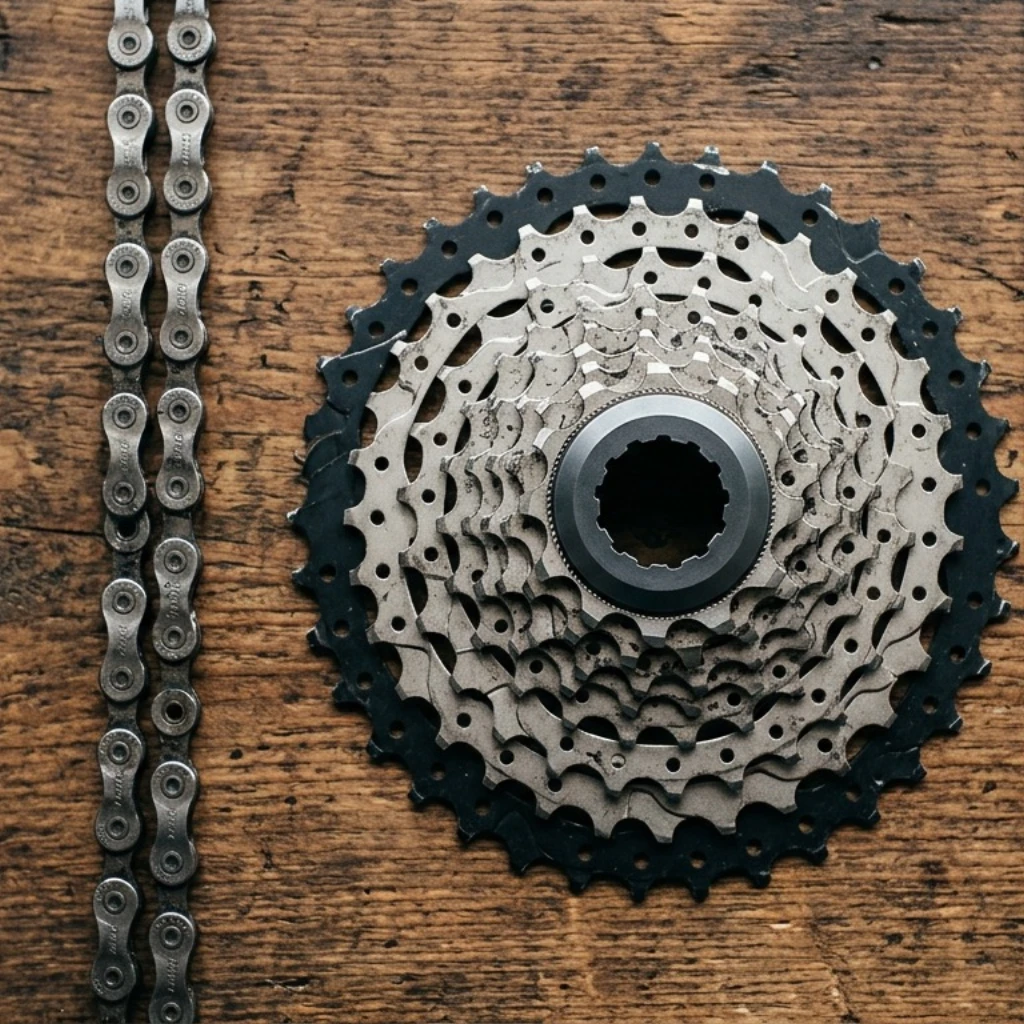


Quick answer: Tracking bike mileage by component means recording distance separately for each part, chain, cassette, brake pads, tires, starting from the date each one was installed, rather than relying on one running total for the whole bike. A bike's total odometer keeps climbing forever. A component's mileage resets to zero every time it's replaced. Strava's own Gear feature supports basic per-component tracking, but setup is website-only and there are no automated alerts when a component crosses its service threshold, which is the part that actually prevents surprises.
Why Total Bike Mileage Isn't the Number That Matters
A bike computer or a cycling app is very good at answering one question: how far has this bike gone since you started using it? That's a useful number for training load, but it's the wrong number for maintenance. A chain installed 2,000 km ago and a cassette installed 8,000 km ago live on the same bike, sharing the same total odometer, wearing on completely different clocks.
The bike's lifetime total tells you nothing about either of them. What you actually need is: how far has each part gone since it went on the bike, measured against the threshold for that specific part. That's a different data structure entirely, one where a single ride updates several independent counters at once instead of one shared number.
How Strava's Gear Tracking Handles This, and Where It Stops
Strava has supported basic component-level tracking since 2021, breaking a bike's Gear entry down into individual parts so each one can carry its own mileage.
"[You can] break that down into all of the components attached to that bike." road.cc: Strava expands 'My Gear' mileage tracker for bikes
It's a real feature, and it solves the core problem this post is about: a chain and a cassette get their own running totals instead of sharing the bike's lifetime number. But the setup lives on Strava's website rather than the mobile app, and readers reacted to the launch by immediately asking for the piece that was missing:
"Most users might find the components tracking useful for a few days or weeks, but they'll most likely forget about it with time," one commenter wrote, asking for "alerts when they have hit that mileage." road.cc: Strava expands 'My Gear' mileage tracker for bikes
That's the actual gap. Per-component mileage without a threshold and an alert is just a number you have to remember to go check. This is also a separate feature from Strava's newer automatic gear assignment, which matches an activity to a bike based on the activity type (a mountain bike ride auto-assigns your mountain bike) but doesn't touch component-level distance at all. The two are easy to conflate; only the older Gear breakdown handles individual parts.
What Full Component-Level Tracking Actually Requires
Getting this right takes three things working together, not just one.
The first is a per-component odometer that starts at zero on the install date and counts every ride from there, independent of whatever the bike's total reads. Replace the chain, and its counter resets. The cassette, the brake pads, the tires each keep their own count running in parallel, all fed by the same rides.
The second is a threshold specific to that component and your drivetrain, not a generic calendar reminder. A chain's replacement point depends on wear percentage and speed count, not a flat number of months. A brake pad's depends on thickness in millimetres. Different components need different math behind the same underlying distance data.
The third is an alert that fires on its own, before the threshold is crossed rather than after. This is exactly the piece the road.cc commenters were asking for in 2021: tracking without a proactive alert is data you have to remember to check, which is the same failure mode as not tracking anything at all.
What This Looks Like on a Single Ride
To track bike mileage by component in practice, one ride has to update several independent numbers at once, not just add to a single total. A 60 km gravel ride, for example, adds 60 km to the bike's lifetime distance, 60 km to a chain installed three weeks ago, 60 km to a cassette that's been on the bike for a year, and 60 km to a set of brake pads fitted last month, each of those four numbers measured against a different threshold and sitting at a different point in its own service life. The bike's total is one line. The maintenance picture is four separate ones, updated from the same 60 km.
The Multi-Bike Version of This Problem
Everything above assumes one bike. Add a second or third bike to the mix and there's a related but distinct problem: making sure each ride's distance lands on the correct bike in the first place, and that components moved between bikes don't lose their history in the swap. How to Track Bike Maintenance When You Own Two or More Bikes covers that side in full.
How Componentry Tracks Mileage by Component
Componentry builds the per-component odometer, the drivetrain-specific threshold, and the proactive alert into one system, synced automatically from Strava, Garmin, or Wahoo.
Every ride updates every component on the relevant bike at once: the chain, the cassette, the brake pads, the tires, and anything else you've registered, each against its own installation date and its own configured threshold. Replace a part, log it once, and its counter starts fresh while everything else on the bike keeps its existing history intact. When a component approaches its threshold, Componentry alerts you before it's overdue rather than leaving a number for you to remember to check.
The distinction that matters is the one this whole post has been about: your bike's lifetime mileage is a training statistic. Your chain's mileage since installation is a maintenance decision. They're different numbers, and only one of them tells you when to act.
Track every component's own mileage, not just your bike's total. Componentry updates the odometer on every part, automatically, from your connected Strava, Garmin, or Wahoo rides. Get started free →
Further Reading
Componentry Resources:
- How to Track Bike Maintenance When You Own Two or More Bikes: the bike-level version of this problem, for multi-bike households
- When to Replace Your Bike Chain: the wear thresholds a per-component odometer needs to check against
- Strava Bike Maintenance: how Componentry's Strava sync works in full
Technical Reference:
- road.cc: Strava expands 'My Gear' mileage tracker for bikes: how Strava's own component tracking works, and what it's missing