What Actually Ends a Carbon Frame
These are the causes worth guarding against:
- Impacts. Trek says carbon "could break or it could conceal damage from the naked eye." A frame that looks normal after an impact is not shown to be safe.
- Crushed clamp areas. Over-tightening a seatpost clamp, stem or bottle cage bolt can crack or crush the layers under it. Roadman names this as the second main risk.
- Repeat damage. A frame that was hit once and never checked, or a repaired area that is hit again, is the case a specialist is most likely to condemn.
- Heat. Resin softens when it gets hot. We found no bike maker's published temperature limit. Roadman says a car boot can reach 60 to 70 degrees Celsius and says resin used in frames resists far higher temperatures. The author gives no source for either figure, so treat them as an estimate. Keeping the bike out of a hot closed car is cheap insurance.
When to Stop Riding and Have the Frame Checked
Trek's carbon care page lists the events that should end a ride and start an inspection:
- Hitting a kerb, guardrail, pothole or parked car.
- An object caught in the front wheel that stops the bike suddenly.
- Being hit by a car or van.
- A crash after which the bike does not feel or sound right.
- The bike hitting a garage lintel while on a roof rack.
Trek's instruction is to stop riding, take the bike to an authorised retailer, and replace the frame or part if there is any doubt about it. Check your own maker's guidance too.
How to Check a Carbon Frame for Damage
A home check is a first screen, not a verdict. Roadman describes three steps, and they work in this order.
- Clean the frame and look in good light. Dirt hides cracks. Check the head tube, bottom bracket area, seat tube junction and chainstays, plus the area around any scuff. A paint chip can hint at a crack under it.
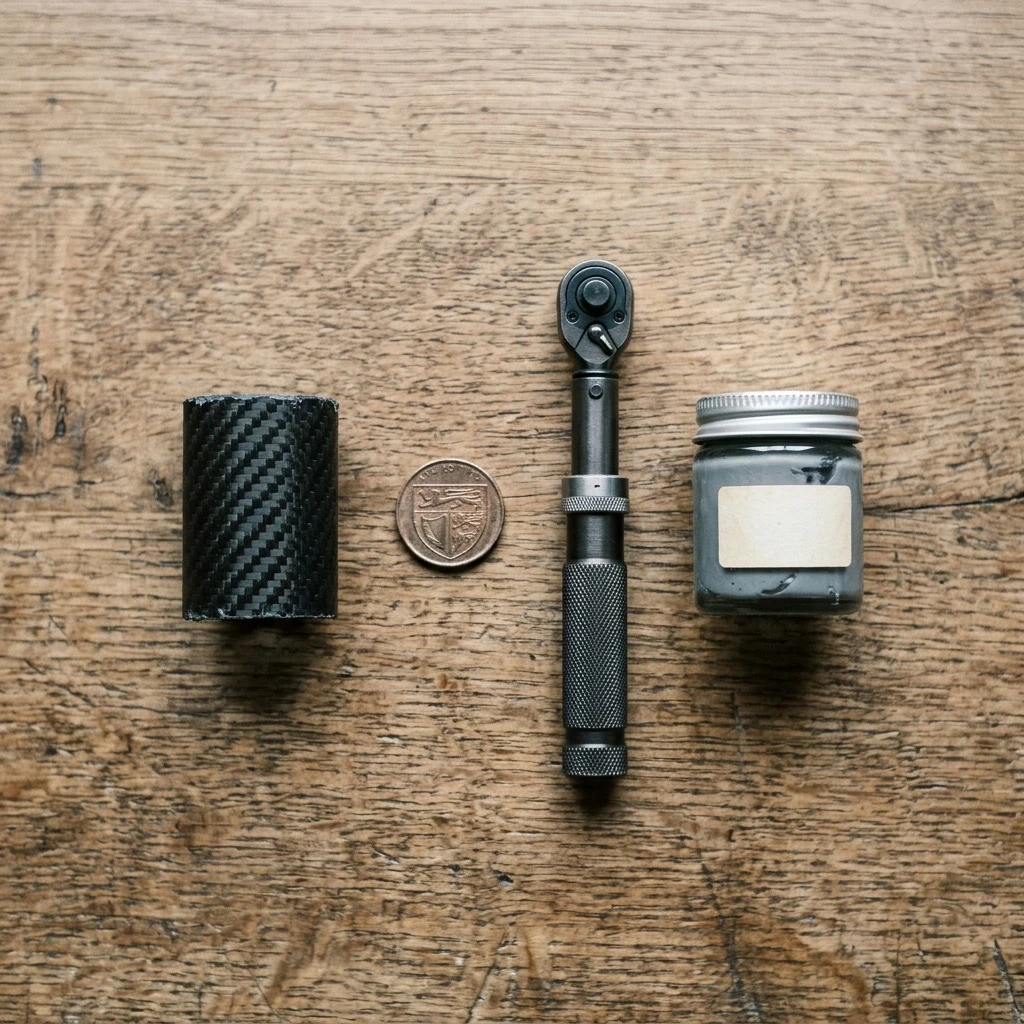
- Run the tap test. Tap along each tube every few centimetres with a coin and listen. Start on a section you know is fine to learn the tone. A clear ring is reassuring. A dull thud can mean the layers have separated. Roadman says a clear tap means that point is probably fine, not certainly fine.
- Press along the tubes. Push firmly and feel for a soft spot or give.
The limits matter. Ruckus Composites, a carbon inspection and repair shop in Portland, Oregon, notes that both sight and sound checks are subject to human error. It uses an ultrasonic gauge, which can find internal delamination without cutting the frame open. A shop with that equipment is the next step if anything looks, sounds or feels wrong, and after any high-speed crash or vehicle impact.
What a Professional Check and Repair Cost
Prices come from US shops and vary by region:
| Service | Figure | Source |
|---|
| Ultrasound scan | $100 to $250 | Roadman Cycling |
| Full frame and fork inspection | $250, with $100 credited if you go on to repair | Ruckus Composites |
| Average repair, including paint | $500 | Ruckus Composites |
Roadman puts repair at $200 to $500. Trek runs a Carbon Care programme that discounts a replacement frame, fork or part after damage, but its page gives no figure. Check what your maker offers and whether it expires, because crash damage is often excluded from a standard warranty.
How to Look After a Carbon Frame
Most of this takes a few minutes at each service.
- Use a torque wrench. Use the value printed on the part or in the maker's manual. Roadman lists 5 to 7 Nm for a seatpost clamp and 4 to 6 Nm for a stem faceplate as typical figures, but your parts may differ. Our basic maintenance guide covers torque and tools.
- Use carbon assembly paste on clamped parts. Park Tool says carbon seatposts take assembly compound, not grease, because it adds friction so you can clamp with less force. It also says not to grease the stem clamp. Our rust prevention guide covers seatpost grease for metal frames.
- Do not clamp a tube in a workstand. Clamp a seatpost or use a carbon-safe clamp.
- Store the bike indoors. Keep it out of hot closed cars and direct sun for long periods.
- Look the frame over at every clean. Our tune-up checklist has a place for it.
When to Retire or Repair a Carbon Frame
Roadman separates cosmetic from structural damage. A chip that stops at the paint, with clean weave showing, is cosmetic. Cracks through the weave, delamination, soft spots or visible deformation are structural.
Retire the frame, or send it to a specialist, when:
- A crack goes through the weave and a specialist says a repair is not viable.
- A significant impact was never inspected.
- Delamination is confirmed over a large area or at a critical junction.
- A repaired area has been hit again.
If you are unsure, follow Trek's rule and replace the part rather than ride it. Do not retire a frame for cosmetic damage or age alone.
How Componentry Helps You Track a Carbon Frame
Componentry does not measure frame fatigue, count frame loading cycles or detect damage. No app can see inside a frame. What it can hold is the history a safe-or-not decision depends on.
- Log every incident when it happens. Record the crash or drop, what you checked and what you found. A dated note is more useful than memory.
- Log torque checks and inspections so you can see when the last frame check was.
- Set a reminder for a yearly frame inspection, and a shorter one after a heavy crash season.
- Track the distance and ride time on the bike from every Strava, Garmin or Wahoo ride, so the parts that wear, such as the chain, are replaced on time.
That record also helps when you sell. A buyer of a used carbon bike is estimating hidden damage, and our guide to service history and resale value covers how a logged history answers that worry.
Related Componentry guides:
Sources: