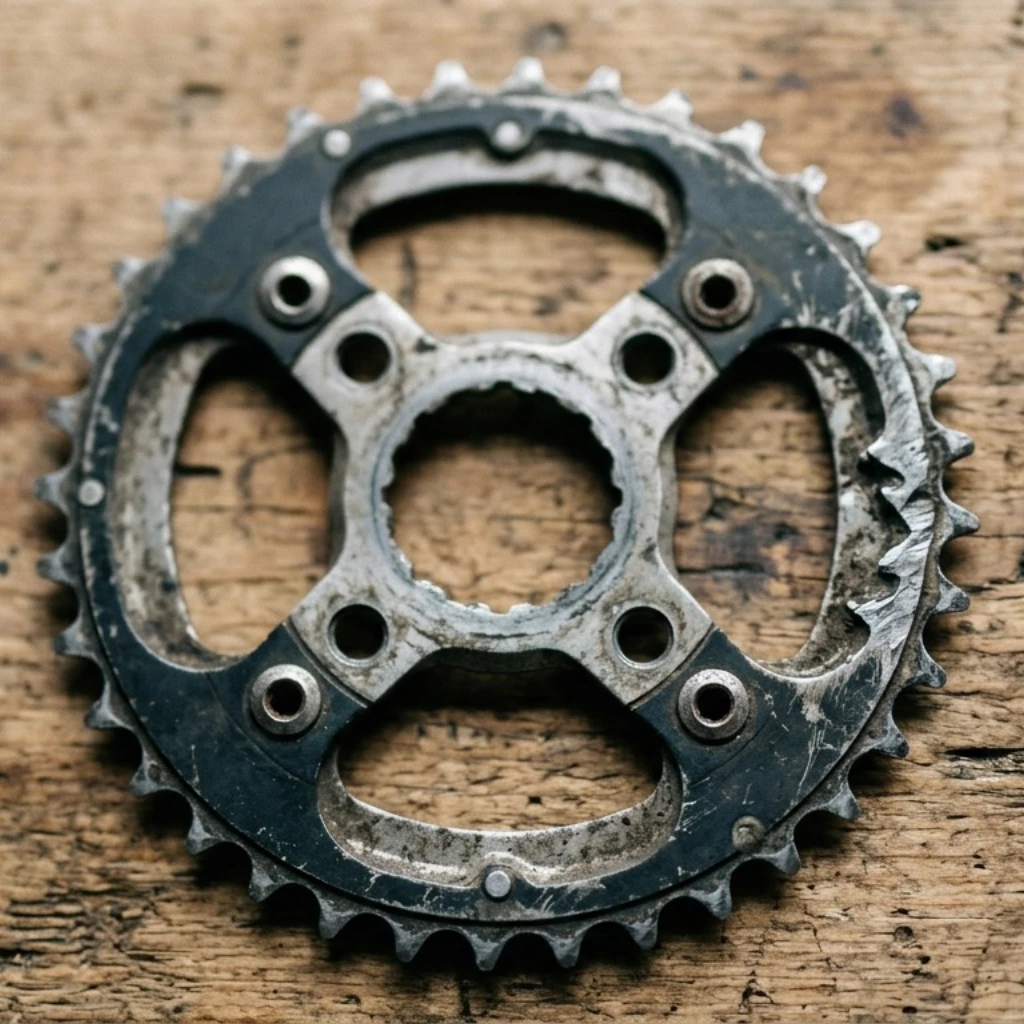


Quick answer: Knowing when to replace chainring teeth comes down to condition, not mileage. There's no manufacturer mileage figure for chainring replacement, unlike the 0.5% wear threshold for chains or the km ranges published for cassettes. Instead, look for the same hooked "shark fin" tooth profile that shows up on worn cassette cogs, listen for rough or noisy running under load, and watch for chain suck on the inner ring. The practical test that stands in for a missing number: fit a new chain, and if it skips on the chainring, the chainring is worn regardless of how far it's actually been ridden.
Why Chainrings Don't Have a Mileage Spec
Chains have a wear percentage. Cassettes have published kilometre ranges by material tier. Chainrings have neither, and it isn't an oversight. SRAM's Chris McKenney addressed this directly:
"Rough/noisy running is the best way to tell if a chainring needs replacing." road.cc: Are your chainrings and cassette worn?
The same piece is explicit about why no number exists at all:
"Brands don't offer guidelines relating to the mileage you're likely to get from your cassette or chainrings because there are too many variables involved." road.cc: Are your chainrings and cassette worn?
That's a genuinely different situation from chain wear, where 0.5% is a hard, published, near-universal number. A chainring's wear depends on gear selection habits, cross-chaining frequency, how consistently the chain itself gets replaced on schedule, and how much load typically goes through which ring, factors specific enough to a rider's habits that no manufacturer will commit to a figure.
What Worn Chainring Teeth Actually Look Like
The wear pattern is the same shark-fin shape cassette teeth develop: a healthy tooth is roughly symmetric front to back, and a worn one leans forward in the direction of chain travel, with the leading edge rounded away.
The practical check: flip the bike, spin the cranks slowly, and look along the ring at eye level. What you're looking for is teeth that are noticeably shorter or more hooked than their neighbours, not a single damaged tooth (that's usually impact damage from a rock strike or a dropped chain, not wear) but a spreading pattern across several teeth. There's no published count of affected teeth that triggers replacement; it's a pattern to recognize, not a number to hit.
Daylight visible between the teeth and a freshly fitted chain is a further, more advanced sign. By that point the ring has usually already started accelerating wear on the new chain riding on it.
Symptoms That Show Up Before You Look
Rough or noisy running under load is the front-line symptom, per McKenney's own guidance above, and it often shows up before the tooth profile is bad enough to spot by eye. On inner rings specifically, chain suck (the chain failing to release cleanly at the bottom of the ring and getting dragged up and around) is a strong sign the tooth profile has degraded enough to grip the chain when it shouldn't.
Poor or inconsistent shifting onto the outer ring, when the front derailleur itself is correctly adjusted, points the same direction. If a shift that used to be clean has quietly gotten worse over months and adjustment doesn't fix it, tooth wear on the ring is a more likely explanation than a derailleur problem.
Narrow-Wide Rings on a Faster Clock
Most 1x drivetrains (single chainring, no front derailleur) run a narrow-wide tooth profile, alternating tooth widths that match the chain's inner and outer links to keep it seated without a front derailleur cage to help retain it.
"A worn tooth profile can lead to chain suck, where the chain fails to disengage from the chainring at the end of the rotation." BikeRadar: What is a narrow-wide chainring?
That retention design is exactly what degrades first as the ring wears. A 1x ring relies on the alternating tooth widths gripping the chain precisely; once the teeth round off, the ring loses the mechanical retention a front derailleur cage would otherwise provide, so chain drops and chain suck tend to appear earlier on a worn narrow-wide ring than the equivalent symptom would on a multi-ring setup. Riders on 1x gravel or mountain bikes have less margin between "wear is starting" and "the chain is coming off," which makes the running-noise and chain-suck checks above worth doing more often, not just when something already feels wrong.
The Test That Replaces a Missing Number
Since there's no mileage figure to check against, road.cc's recommended practical test is the closest thing to a definitive answer: fit a new chain, and see what happens. A chainring within its service life lets a new chain engage cleanly. A worn one skips under load, the same diagnostic already used to confirm cassette wear, because the underlying problem is identical: a new chain's precise pitch no longer matches a tooth profile that's been ground into a different shape.
If a new chain skips specifically on the chainring rather than the cassette, that isolates the wear to the front of the drivetrain rather than the back, worth knowing before ordering parts.
How Componentry Tracks a Component With No Fixed Threshold
A component with no manufacturer mileage spec is still a component that wears, which is exactly the case a fixed-interval reminder handles badly and a distance-and-symptom combination handles well.
Componentry tracks chainring distance the same way it tracks every other component, synced automatically from Strava, Garmin, or Wahoo. Since there's no universal wear percentage to alert against, the useful move is pairing that running distance with the inspection habit above: check the tooth profile and listen for noise at the same interval you'd already check the chain, since a worn chain is usually what accelerated the chainring's wear in the first place. Distance tells you it's been long enough to be worth looking. The look itself is still the part that answers the question.
Track the chainring distance the wear thresholds can't tell you. Componentry logs distance on every component, including the ones without a published wear spec, automatically from your connected Strava, Garmin, or Wahoo rides. Get started free →
Further Reading
Componentry Resources:
- When to Replace Your Bike Chain: the 0.5% threshold a worn chainring usually accelerates
- How Long Does a Bike Cassette Last?: the same shark-fin wear pattern, on the other end of the drivetrain
- The Chain-Stretch Domino Effect: what it costs when chain wear reaches the chainrings
Technical Reference:
- road.cc: Are your chainrings and cassette worn?: SRAM's guidance on chainring wear signs, and why no mileage spec exists
- BikeRadar: What is a narrow-wide chainring?: how 1x tooth retention works, and what happens when it wears
- TBS Bike Parts: How to Spot a Worn Chainring: the visual inspection method