New Pads That Squeal: Bed-In
If the noise started right after you fitted new pads or rotors, suspect bed-in first. SRAM describes bed-in as depositing an even layer of pad material onto the braking surface of the rotor, which it says gives power, consistency and quiet braking. Its guide adds a warning:
"Every time you install new brake pads and rotors, bed-in must be repeated. Skipping bed-in will reduce your system's power and increase the chance of brake noise." SRAM: Brake Service Guide
SRAM's procedure for its road brakes goes like this. Stay seated and do not lock the wheels at any point.
- Accelerate to a moderate speed, then firmly apply the brakes until you are at walking speed. Repeat approximately twenty times.
- Accelerate to a faster speed, then very firmly apply the brakes until you are at walking speed. Repeat approximately ten times.
- Allow the brakes to cool before any more riding.
SRAM also says the caliper may need to be re-centered afterwards. These steps are SRAM's, so follow your own brake maker's instructions if you have another brand. Our guide on how to change disc brake pads covers the fitting side.
Contamination: The Most Common Cause
Contamination is the cause that sources name most often. road.cc says the most common cause of disc brakes squealing is contamination of the rotor or pads. Park Tool lists squeal among the problems contaminated pads can cause:
"Contaminated pads may cause problems such as a squeal, extra effort at the lever to slow down, or a darkness on the rotor and pads that smears when rubbed with a finger." Park Tool: Disc Brake Pad Removal & Installation
Park Tool also says to look for the source, and names overspray from aerosol lubricants and a leak in the hydraulic system as common ones. Chain lube drifting onto the rotor belongs on that list, and iFixit says to take care that no chain oil reaches the rotor.
Cleaning a Contaminated Rotor
SRAM's advice for brakes that were quiet and then started to squeal is to clean the rotors with isopropyl alcohol. SRAM's service guide adds a clean rag to that and says to try it before resorting to replacement. iFixit adds a point that is easy to miss: after cleaning, do not handle the braking surface, because the oils from your skin can cause contamination. BikeRadar gives the same warning about pads.
Pads That Are Soaked
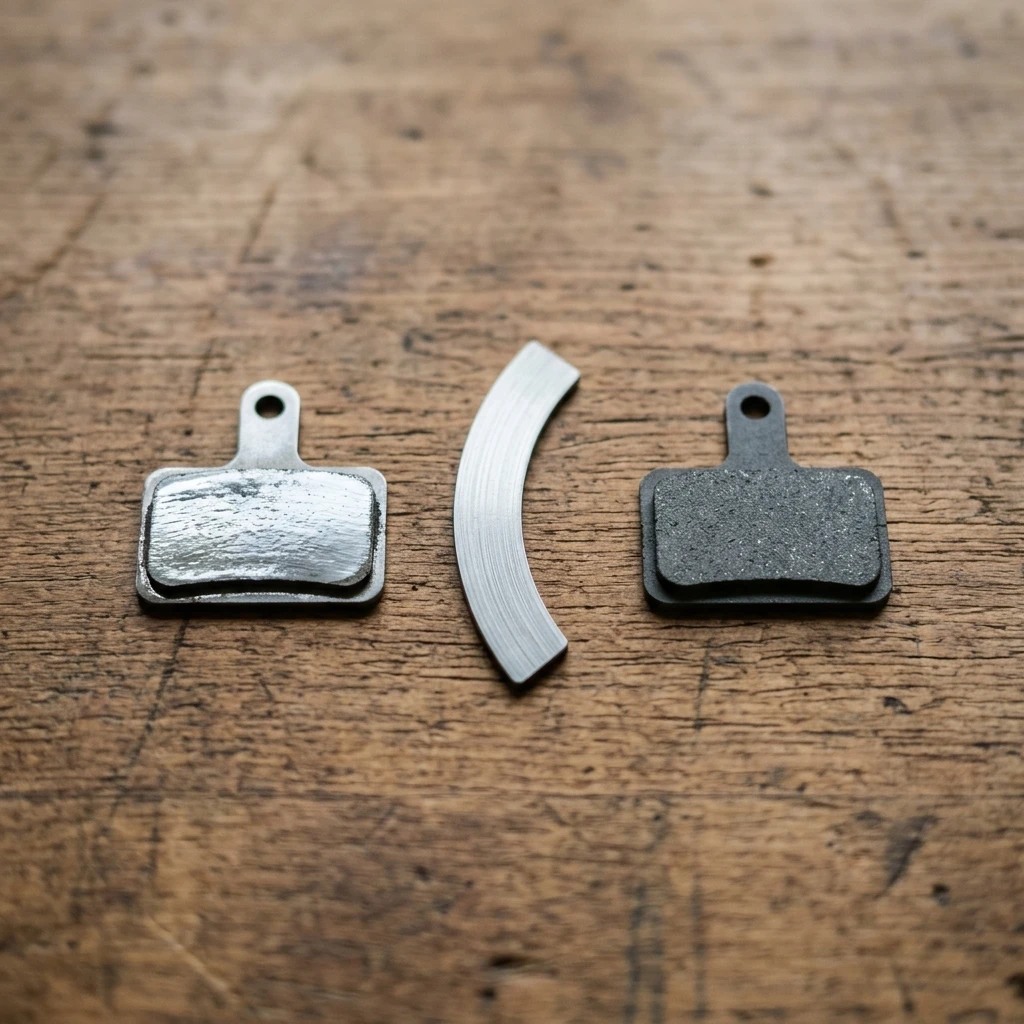
Contamination can spread from the rotor to the pads. iFixit says lingering surface contamination embeds into the pads themselves, and that often the contaminants are too embedded to remove. Its conclusion is that replacing the pads should fix the issue. Shimano, again via road.cc, says that if the grease has soaked through the pad, you might need to replace it. SRAM goes further for noise that persists: replace the pads and the rotors and repeat the bed-in.
Park Tool's list of reasons to replace pads is short: worn out, contaminated, or to change pad material. Contaminated pads are a replacement job, not a thickness question. If the hydraulic system is leaking, fix the leak first, or the new pads will soak up the same fluid. Our hydraulic fluid guide explains the fluid side.
Glazed and Unevenly Worn Pads
Glazing and uneven wear are problems with the pad surface. road.cc says a bit of scrubbing with sandpaper can remove the top layer of residue and any glazing, and that this often works reasonably well, but if the pad is in a bad state you might have to buy new ones. iFixit describes the same reset by sanding, and says that if the pads are too far gone, with one much more worn than the other, new pads are the safest option.
iFixit adds that uneven pads can point to an alignment issue or a sticky piston in the caliper, so sanding a pad without asking why it wore unevenly may only delay the noise. SRAM describes a piston massage procedure for pistons that are not moving freely.
Rotor Condition and Caliper Alignment
If the pads are clean and bedded in, look at what they bite on and how they meet it.
- A bent rotor. road.cc notes that disc rotors can bend quite easily, for example in a car or on a plane, and can be straightened with careful use of an adjustable spanner or a professional tool.
- A layer of the wrong pad material. SRAM says that if you switch brake pad compounds you should fit new rotors, because the old rotor keeps a layer of the previous pad material, which can create noise and reduce performance.
- A caliper that is not square to the rotor. Shimano says that if your brakes judder and squeal, there is a good chance they are not meeting the rotor correctly. road.cc gives the fix: loosen the two caliper bolts, squeeze the brake lever, then tighten the bolts so the caliper sits centrally with equal clearance either side.
Squeal in the Wet
Some noise in wet weather is normal. BikeRadar says it is normal for some noise in the wet, and SRAM says water or dirt temporarily on the rotors can cause noise. If the brakes were quiet in the dry and squeal after a wet ride, a rotor wipe with isopropyl alcohol is the first step SRAM gives. If the noise is still there in dry weather, work back through the causes above.
How to Tell Worn Pads From Other Causes
Worn pads are one cause on the list, and the way to confirm them is by measuring, not by listening. BikeRadar says an ear-scraping howl when braking in the dry, low-power braking or excessive lever travel can all be symptoms of worn out or contaminated pads. The same noise can come from worn or contaminated pads, so sound alone cannot separate them.
Three checks tell them apart:
- Look at the pads through the caliper with the wheel off, and measure what is left. Our guide on when to replace brake pads explains the thickness limits that SRAM and Shimano give and how to check them.
- Look at the rotor and pads for an oily smear or dark patches. Park Tool says contaminated parts leave a darkness that smears when rubbed with a finger.
- Think about what changed. New pads point to bed-in. A recent chain lube, aerosol spray or wet ride points to contamination.
If the pads are thin, replace them and clean the rotor at the same time.
What Not to Do
- Do not spray lubricants near disc brakes. road.cc says it is probably best to avoid using spray lubes anywhere near a bike with disc brakes, and Park Tool names aerosol overspray as a common contamination source.
- Do not put degreaser or chemicals on the pads. Shimano says, as quoted by road.cc, not to use a degreaser or chemicals on brake pads. Rotors and rims get an oil-free disc brake degreaser or isopropyl alcohol; pads do not.
- Do not touch the rotor or pads with bare hands. BikeRadar and iFixit both say skin oils can contaminate them.
- Do not ride on pads that are worn through. Chasing the noise while the backing plate approaches the rotor costs a rotor.
- Do not ignore a fluid leak. Park Tool lists a leak in the hydraulic system as a source of contamination.
Chain lube is a regular culprit. Our best bike chain lube guide and how to clean a bike chain cover the drivetrain side.
Rim Brakes: Toe-In and Clean Surfaces
Rim brakes squeal for related reasons, with one extra fix. road.cc names contamination from enthusiastic chain lubing or oil picked up from wet roads, and says to clean the rims with a degreaser. It also says glazed or unevenly worn blocks can be smoothed with sandpaper or a file, and that worn blocks need replacing; most have wear indicators.
Park Tool explains the other cause for rim brakes:
"Squeal is a flexing back and forth of the brake caliper on the rim surface, creating a resonance." Park Tool: Dual Pivot Brake Service
The fix is toe: Park Tool describes setting the pad so its front edge strikes the rim first, which tends to reduce squeal. Its advice is to ride first, and if the brake does not squeal, toe is not required.
When to Stop Riding and See a Shop
A squeal that goes away after a rotor wipe or a few stops needs no more attention. Stop riding and get a shop check if any of these apply:
- You hear grinding rather than squealing. BikeRadar says pads worn down to the backing plate destroy rotors very quickly, so look before you ride on.
- The brake feels weaker. Park Tool lists extra effort at the lever as a sign of contaminated pads, and BikeRadar lists low-power braking and excessive lever travel.
- There is any sign of fluid around the caliper or hose.
- The noise comes back soon after a clean, with new pads and rotors fitted.
SRAM's guidance for persistent noise is to replace the pads and rotors and repeat the bed-in. If you are not confident doing that, a shop can do it quickly.
Frequently Asked Questions
Why do my bike brakes squeal? Contamination and poor contact are the usual causes. Shimano says grease or oil on the pad, rotor or rim, misaligned braking surfaces, or pads that have not bedded in are the common reasons.
Why do disc brakes squeal? road.cc says the most common cause is contamination of the rotor or pads. Other causes are new pads that have not bedded in, a bent rotor, a misaligned caliper, and glazed pads.
Why do my bike brakes squeal when it rains? BikeRadar says some noise in the wet is normal, and SRAM says water or dirt on the rotors can cause noise temporarily. If it continues after the rotor dries, check the other causes.
Do squeaky bike brakes mean the pads are worn? Not by themselves. BikeRadar lists a howl when braking in the dry as a symptom of worn or contaminated pads. Measure the pads to know.
Can you clean contaminated disc brake pads? Sources disagree on how well. Shimano says you can try sandpaper on the pads but that soaked pads may need replacing, and iFixit says embedded contaminants often keep the squeak, so replacement should fix it. Replace oily pads rather than relying on a clean.
How do I stop new brake pads squealing? Bed them in. SRAM's procedure uses repeated firm stops from speed down to walking pace, then lets the brakes cool.
How Componentry Helps You Keep Brake Maintenance on Schedule
Componentry syncs your rides from Strava, Garmin and Wahoo and adds the distance to the components on the bike you rode. You can add a reminder to a bike or a component, by distance or by time, so a pad and rotor check comes up on a schedule instead of when something starts to squeal.
When you fit new pads or rotors, log a service on the component. Each component keeps its own history, so when a brake starts to make noise you can see what was fitted, when, and how far the bike has gone since.
Recommended Resources & Further Reading
Technical Data:
Componentry Reading: