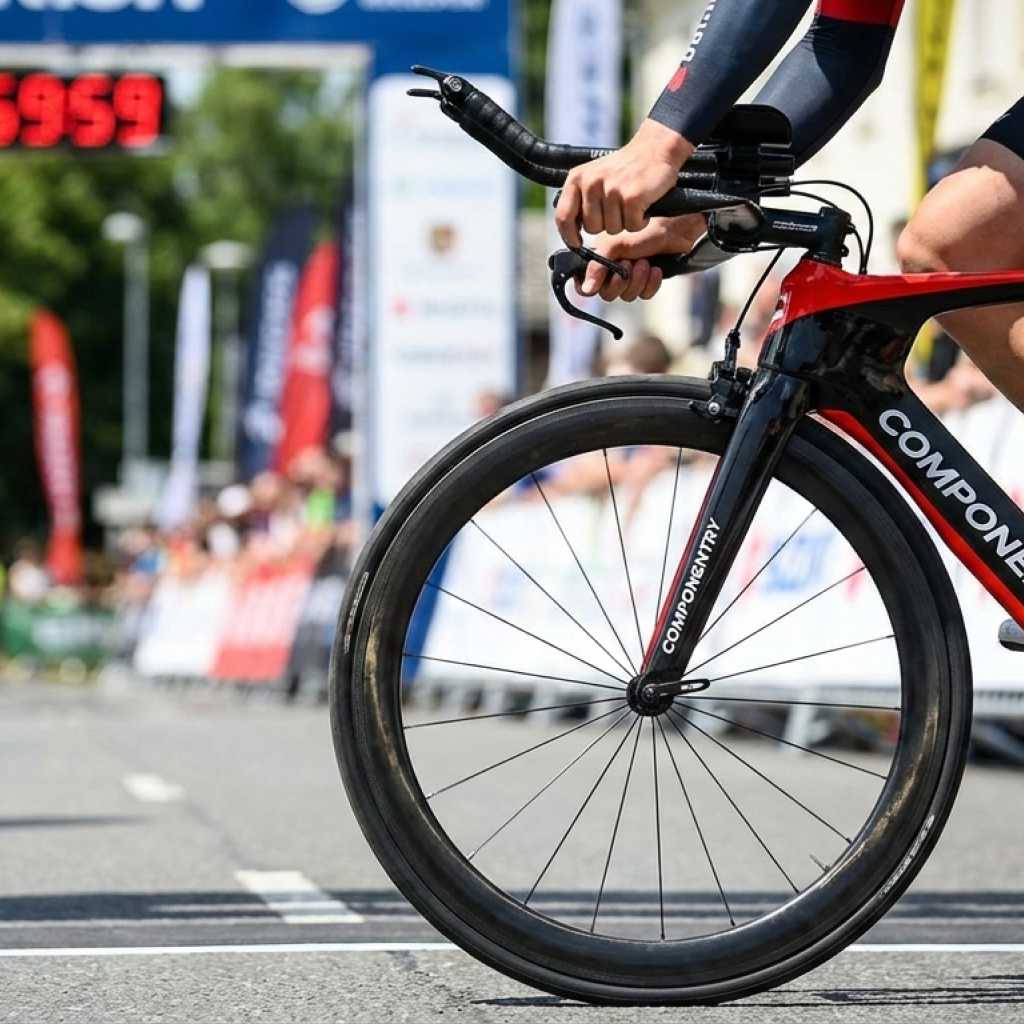
Drivetrain: Chain, Cassette, and Cables
Check chain wear with a chain checker rather than by feel. When to Replace Your Bike Chain covers the exact thresholds by drivetrain speed, but the race-week version of the check is the same tool, just done with enough lead time to fit a new chain and put a few rides on it before race day.
Cassette teeth are the second thing worth a look, since a worn chain and a worn cassette often arrive together.
"The teeth shouldn't look like curved shark fins." Escape Collective: The pre-race checklist
How Long Does a Bike Cassette Last? covers what that hooked profile looks like and what to do once you see it. On a mechanical drivetrain, cable and housing condition is the third check: a shift that's been slightly sluggish for weeks is worth resolving before race day, not during it.
Brakes: Pad Wear and Lever Feel
Braking is the one system on the bike where "good enough" isn't really good enough. When to Replace Brake Pads covers the measurement thresholds in detail. Race week is the moment to actually check them, since a descent-heavy course punishes pads that a flatter training ride never touched.
Lever feel matters alongside pad thickness. A lever that pulls noticeably closer to the bar than the other one, or that's gone spongy, points at a system that needs a bleed before it needs a full pad replacement. Hydraulic Brake Fluid Lifecycle covers bleed intervals for exactly this reason.
Tires: Tread, Sidewall, and Sealant Age
Tires carry three separate race-week checks: tread condition, sidewall integrity, and, for tubeless setups, sealant age.
"Put new tubeless sealant in if not done within the past couple of months." Escape Collective: The pre-race checklist
Tire Lifecycle Management covers sealant refresh intervals, pressure precision, and rubber aging in full. Cuts, bubbles, or fraying on the sidewall are an immediate-replacement signal regardless of how much tread remains, since a sidewall failure at speed doesn't give a warning first.
Bearings and Hubs: The Check Most Riders Skip
Hub play is easy to miss because it doesn't affect shifting or braking feel directly. Grab the wheel at the rim with the bike off the ground and check for side-to-side movement. Any detectable play means the bearings need attention before, not during, a long event. Wheel Bearing Service Intervals and Bottom Bracket Lifecycle cover the two most common places this shows up on a road or gravel bike.
Automating the Weeks-Not-Nights Timeline
Running this checklist manually means remembering to do it with enough lead time, which is exactly the habit that's easy to let slip during a busy training block. Componentry's race-day readiness projection handles the timing side of the problem directly: pick an event date, and it projects the state of every component on your bike against that date, sorted into what's fine, what to monitor, and what to replace before you get there. The Same Distance, a Different Wear Story covers exactly how that projection works.
The checklist above still matters. A projection is only as good as the wear model behind it, and a hands-on check catches things like cable feel or sidewall damage that ride data alone won't show. The projection tells you when to start the checklist early enough for it to matter.
How Componentry Fits Into Your Race Prep
Componentry syncs automatically from Strava, Garmin, or Wahoo, so the race-day projection is built from your actual training data rather than a guess. Set your event date on the bike you're taking, and the readiness report updates as your training volume changes in the lead-up. Pair that projection with the hands-on checks above, done weeks out rather than the night before, and race week stops being a scramble.
Know what needs attention before race day, not during it. Set your event date in Componentry and get a component-by-component readiness report, built from your own ride data. Get started free →
Further Reading
Componentry Resources:
Technical Reference: